Is deep-water dockage in Jupiter Inlet Colony really deep enough for your boat at low tide? If you are eyeing a waterfront home or preparing to list one, that is the right question to ask. Dock depth, access, and permits shape daily boating life and can influence a property’s value. In this guide, you will learn what deep water means locally, how to verify it, which permits apply, and what risks to plan for so you can move forward with confidence. Let’s dive in.
Deep-water dockage defined locally
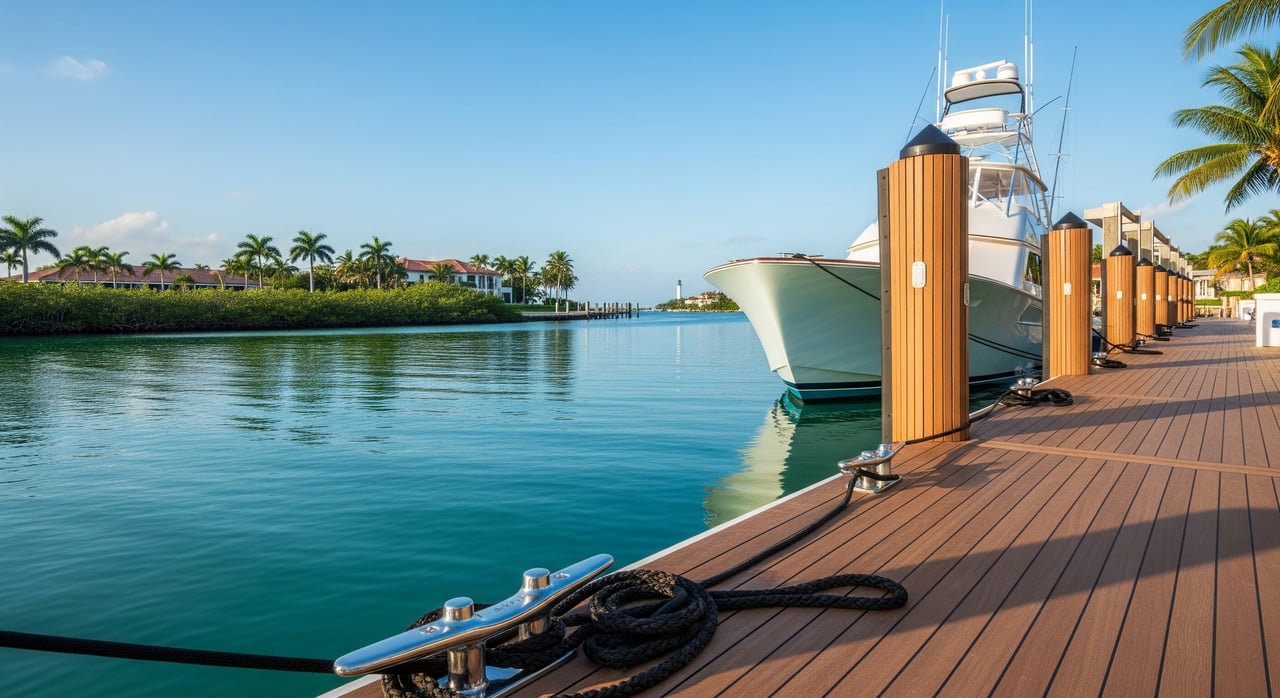
“Deep water” is not a single statewide number. It is a functional description based on your vessel’s draft and the depth at the dock at mean low water. For small recreational boats, 4 to 6 feet at mean low water is often workable. Larger yachts or powerboats may need 7 to 12 or more feet, depending on draft and loading.
In Jupiter Inlet Colony, location matters. The town sits at the mouth of the Jupiter Inlet that connects the Intracoastal Waterway to the Atlantic. Channels and sandbars shift with seasons and storms. Properties closer to maintained channels can have more reliable access than those on shallower backwaters or lagoons.
Your goal is simple. Confirm there is enough depth at the exact dock location at mean low water for your specific vessel, and confirm you have safe, practical access to the maintained channel and the inlet.
Verify dock depth with confidence
Start with charts and tides
Begin with NOAA nautical charts and the nearest NOAA Tides and Currents station to understand mean low water and tidal ranges. Charts give a baseline, but conditions in the inlet can change. Treat charts as a starting point, not the final answer. Always note that chart soundings reference a tidal datum, commonly Mean Lower Low Water.
Get a professional depth survey
Order a recent hydrographic or sonar depth survey at the dock footprint. Ask the surveyor to reference depths to MLLW and include cross sections that show the controlling depth at low tide. Request the date of survey and instrumentation used. A current, property-specific survey is your most reliable tool when vessel drafts and market value are at stake.
Ask about dredging and channel access
Contact the local navigation district or inlet authority to learn about recent dredging, shoaling hot spots, and the condition of maintained channels. Speak with nearby marinas and marine contractors for on-the-water insight about tidal windows and safe routes. Shorter and more predictable transit to the Atlantic is a practical advantage for many buyers.
Permits and approvals you will need
Expect a layered process. Docks, lifts, seawalls, and any dredging touch multiple jurisdictions. You will likely coordinate several permits and approvals before construction or modification.
Federal oversight
The U.S. Army Corps of Engineers, Jacksonville District, reviews construction and dredging in navigable waters. Section 10 of the Rivers and Harbors Act covers structures or obstructions in navigable waters. Section 404 may apply where dredge or fill affects wetlands. Some small docks can fall under Nationwide Permits, but site specifics and cumulative impacts control eligibility.
State of Florida requirements
The Florida Department of Environmental Protection permits dredge and fill activities and manages sovereign submerged lands under state ownership. If a private dock crosses sovereign submerged lands, you may need a consent, easement, or lease in addition to permits. The Florida Fish and Wildlife Conservation Commission provides guidance on protected species and navigation safety and may influence dock design and placement.
County and town rules
Palm Beach County environmental offices review shoreline stabilization, local coastal rules, and floodplain management. The Town of Jupiter Inlet Colony issues building permits and enforces local zoning, setbacks, lighting, and equipment limits. The town will typically require proof of state and federal approvals before issuing a local permit.
Protected resources and manatees
Seagrass, mangroves, and other sensitive habitats receive protection under state and federal law. Dock shading, pile placement, and construction methods may require mitigation or design changes. Manatee protection zones and speed rules can affect how and when you operate your boat and may shape dock features like signage and piling choices.
Timelines and who to hire
Permitting time frames range from a few weeks to many months, depending on environmental review, public notice, and interagency coordination. Most owners retain a local marine contractor and permitting specialist to assemble applications and manage submittals. Build realistic lead time into your purchase or renovation plan.
Dock types, lifts, and upkeep
Fixed vs floating docks
Fixed piers on wood or concrete piles are durable and common for residential use. They can trigger additional review if shading impacts seagrass. Floating docks adapt to tides and can offer a lighter footprint in some settings. Both types still require adequate lateral clearance, anchoring, and compliant design.
Lifts and utilities
Boat lifts can reduce hull maintenance and storm exposure when used correctly. Confirm the structural capacity of piles and the availability of electrical service. Lifts and davits often require separate approvals and must meet local code. Factor in routine maintenance for motors, cables, and controls.
Seawalls and lifecycle upkeep
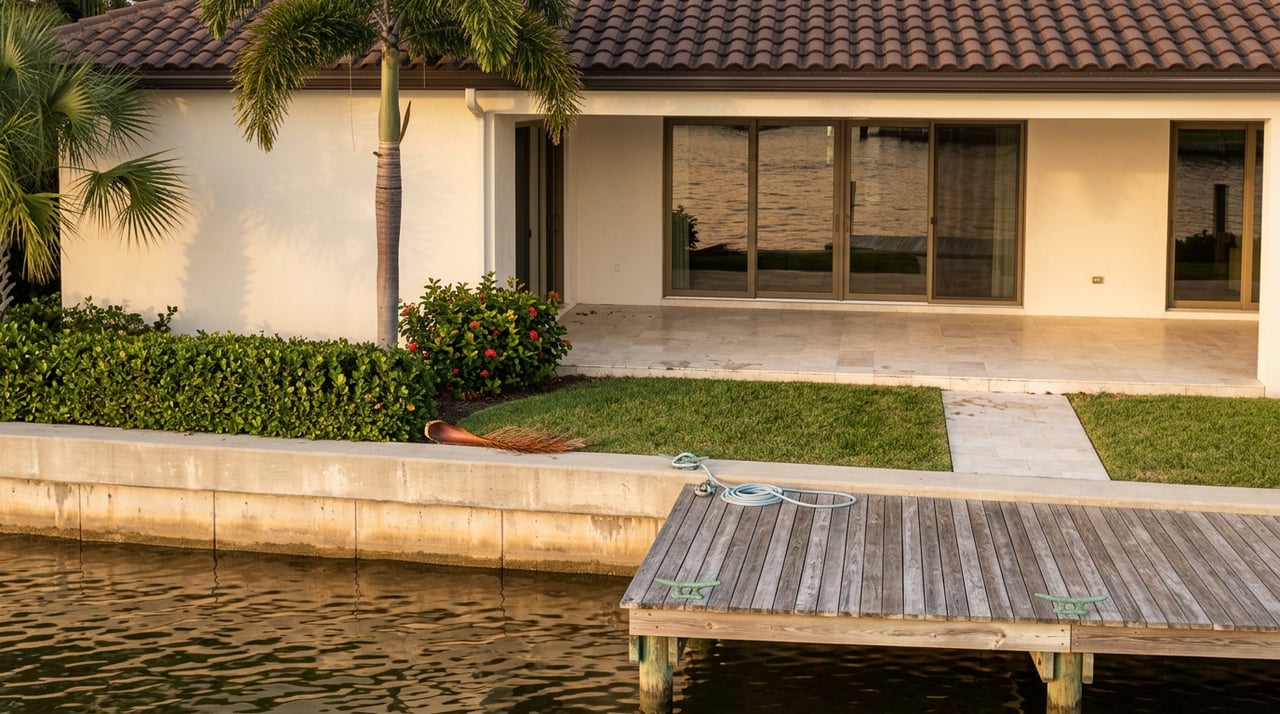
Dock utility and seawall condition are linked. Failing seawalls can undermine docks and raise repair costs. Plan for periodic pile replacement, decking upgrades, treatment against marine borers, and electrical system checks. In some cases, periodic dredging near the dock is proposed, but approvals are challenging where seagrass is present.
Insurance and storm planning
Coastal properties sit in flood zones. Review FEMA flood maps and speak with your insurance advisor about coverage and cost. Many owners carry liability coverage for dock use in addition to flood and wind policies. Consider resilient features like removable ramp sections and lift tie-downs to reduce damage risk during storms.
Navigation and environmental risks to weigh
Inlet dynamics and dredging programs
Jupiter Inlet is dynamic. Shoaling can reduce depths quickly after storms or seasonal sand movement. Dredging by the navigation district or federal projects aims to restore target depths, but frequency and funding vary. Ask for recent records and planned work to gauge long-term reliability of access.
Storms and sea-level rise
Storm surge, wave action, and rising sea levels increase risk to docks and low-lying structures over time. Evaluate elevation and potential water levels during your due diligence. Adjustable lifts and modular dock components can improve resilience, but they do not remove risk. Plan for regular inspections after significant weather events.
Safety and local knowledge
Local knowledge matters for safe transit through the inlet. Tidal windows, shifting bars, and strong currents can limit passage for larger vessels at certain tides. Check official notices to mariners and coordinate with local marina operators or pilots for updates on aids to navigation and temporary closures.
Buyer and seller checklist
- Obtain a recent depth survey at the dock footprint referenced to Mean Lower Low Water.
- Collect recorded riparian easements, prior permits, leases, or notices tied to the dock or seawall.
- Confirm whether submerged lands under the dock are state owned and whether an easement or lease exists.
- Request maintenance history, including pile replacements, lift work, electrical upgrades, and any dredging.
- Contact local authorities and experts: the Town of Jupiter Inlet Colony building department, Palm Beach County environmental offices, the Florida DEP, the U.S. Army Corps of Engineers Jacksonville District, the local navigation district, and NOAA for charts and tidal data.
- Review FEMA flood maps and discuss flood and wind insurance with your advisor.
- Time the transit to the Atlantic and note any speed zones or seasonal restrictions that affect your use.
- If you plan construction or modification, engage a licensed marine contractor and an environmental consultant early to scope permits, timelines, and costs.
Value and marketability impact
Reliable deep-water dockage with convenient channel access can command a market premium. Buyers with larger vessels prioritize dependable depth at low tide, sound dock condition, and clear permits. The length of waterfront frontage, allowed lift capacity, and transit time to open water also affect perceived value.
If a property has shallow or uncertain access, value can be affected. Buyers may price in future dredging risk, expected maintenance, or possible permit hurdles. Sellers can protect value by assembling a clean package of permits, surveys, maintenance records, and practical navigation notes for buyers and appraisers.
Your next step
If you want to buy or sell in Jupiter Inlet Colony with clarity about dock depth, access, and permits, bring in a team that knows the water as well as the market. With design-led presentation and neighborhood-level expertise, you can position a waterfront home to speak to serious boaters and lifestyle buyers. Ready to talk through your goals and next steps? Schedule a Free Consultation with Lilly Luxury Living at ONE Sotheby’s International Realty.
FAQs
What does deep-water dockage mean in Jupiter Inlet Colony?
- It means the dock has enough depth at mean low water for your specific vessel to avoid grounding, which varies by draft, local shoaling, and tidal ranges.
How can I verify the depth at a specific dock before buying?
- Combine NOAA charts and tidal data with a recent, property-specific depth survey referenced to Mean Lower Low Water for the most reliable picture.
Which permits are required to build or modify a dock here?
- Expect reviews from the U.S. Army Corps of Engineers, Florida DEP, Palm Beach County, and the Town of Jupiter Inlet Colony, plus compliance with protected resources.
Can I dredge my private slip to create more depth?
- Private dredging is heavily regulated, especially in seagrass areas, and may be limited or require mitigation; consult permitting authorities and specialists early.
How do inlet shoaling and storms affect long-term access?
- Shoaling can reduce depths quickly, and storms can damage docks; monitor dredging programs, inspect after storms, and plan resilient design features.
Are floating docks a good option for variable depths?
- Floating docks can adapt to tides and may have a lighter footprint, but still require adequate depth, clearance, and proper anchoring under local rules.
What insurance should I consider for docks and lifts?
- Review flood and wind coverage, plus liability for dock use; confirm policy details and costs based on FEMA mapping and your property’s elevation and features.