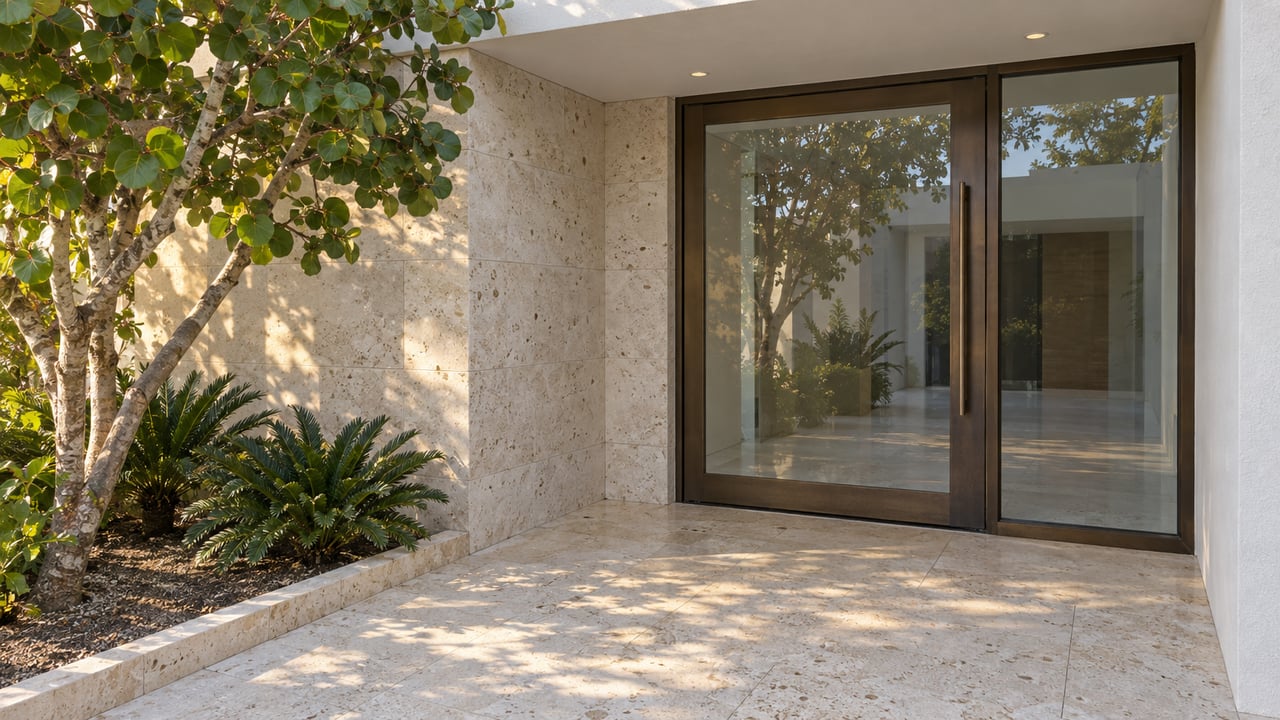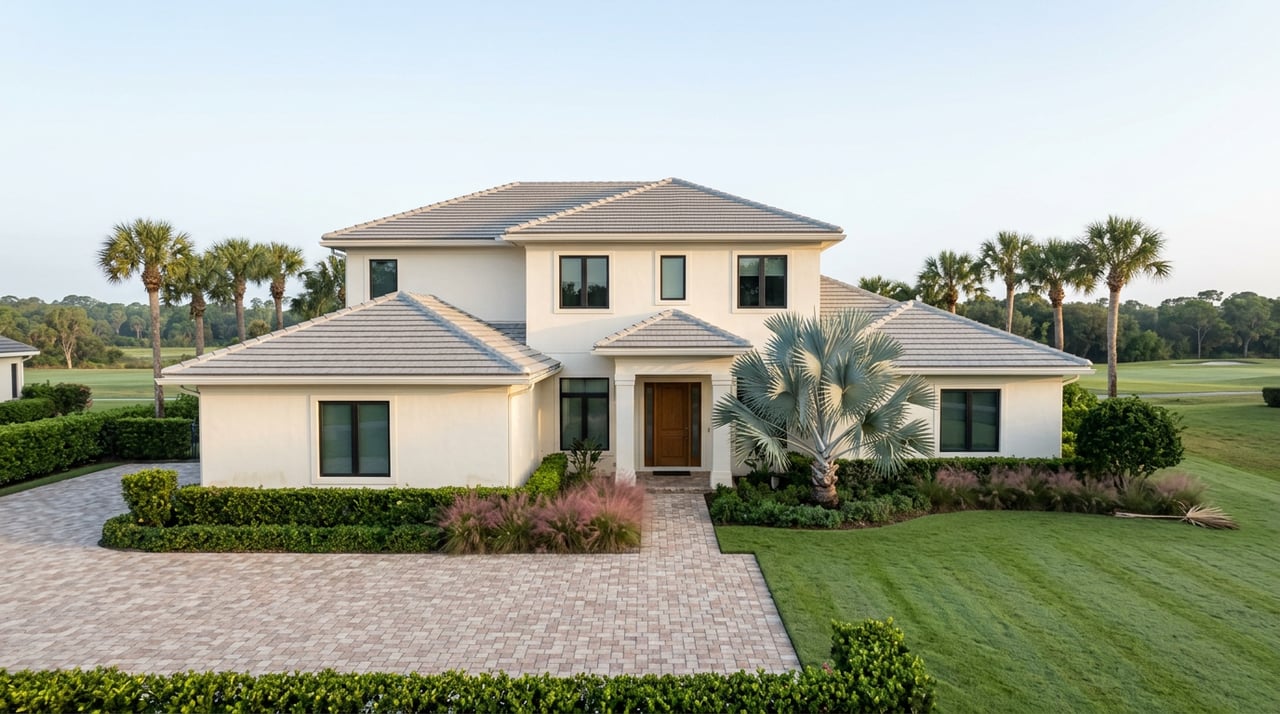
Ask two buyers who closed on homes at Avenir this year what their community actually costs them annually, and you may get two answers that don't resemble each other at all. One person points to a line on their property tax bill. The other points to a country club invoice with six figures on it. Both bought in the same 4,752-acre master-planned community in Palm Beach Gardens. Neither is wrong. They just landed in different parts of Avenir, and Avenir handles its infrastructure and amenity costs differently depending on where in the community a home sits.
That distinction rarely survives a first conversation about "Avenir's low HOA fee." The number quoted most often, somewhere in the $258 to $416 range per month for the community's residential enclaves, is real. It's also only one of two bills a buyer might owe, and the second one doesn't show up on the same statement.
The CDD Bond Lives on the Tax Bill, Not the HOA Statement
Avenir's infrastructure, its roads, stormwater systems, entry features, lakes, and much of its clubhouse, was financed the way large Florida master-planned communities typically finance buildout: through a Community Development District. The Avenir Community Development District was created on January 5, 2017, by Palm Beach Gardens Ordinance 17-2016, and it's governed by a five-member board elected by property owners inside the district.
The CDD's job is straightforward. It issues bonds to pay for the infrastructure up front, then levies annual assessments to pay that debt back, plus the ongoing cost of operating and maintaining what the bonds built. Those assessments are collected by the Palm Beach County Tax Collector and appear in the non-ad valorem section of the annual property tax bill, not in the HOA statement a listing agent hands you.
For a typical Avenir home, an annual CDD assessment adds to the carrying cost. Add that to the enclave HOA dues, and the real annual carrying cost looks noticeably different from the number most listings lead with.
Why Two Identical Floor Plans Can Owe Different Amounts
Here's where it gets specific to Avenir rather than generic to CDDs. The district didn't finance its buildout with a single bond issue. The Florida Auditor General's report records a $66.21 million series in 2018 to fund the community's first assessment area and its clubhouse, and a $15.7 million series in 2019 for the same area; FMSbonds reports additional financing in 2021 that pushed cumulative bond proceeds past $95 million; and a 2024 preliminary official statement identifies a smaller series, roughly $12.33 million, specifically for a single parcel inside the community's second assessment area.
Each of those series carries its own repayment schedule. That's why two houses with the same floor plan, built by the same builder, in the same village, can carry different annual assessments. According to Tour Avenir, the bond portion of the fee isn't permanent. It typically runs off over a fixed period, often 20 to 30 years, after which a home's CDD bill drops to the operations and maintenance portion only. Until then, the number on the tax bill is tied to the parcel, not the floor plan.
A buyer comparing two nearly identical Avenir listings should ask which bond series covers each parcel before assuming the HOA fee tells the whole story.
Panther National Buyers Pay the Bond and a Country Club Bill
This is the part of the Avenir pitch that doesn't hold up evenly across the community. The idea that new construction lets buyers skip the six-figure country club buy-ins associated with Palm Beach Gardens' older gated communities is true for most of Avenir's eight villages. It is not true for Panther National.
Panther National is the golf enclave inside Avenir, 218 custom estates spread across 400 acres, built around a Jack Nicklaus and Justin Thomas designed championship course and a 55,000 square foot clubhouse opening in fall 2026. Membership there works like membership at any private club: an initiation fee of $500,000 for outside buyers, discounted to $400,000 for homeowners already inside the community, plus annual dues in the low $30,000s. The club describes itself as invitation-only, with a formal candidate submission process rather than an open enrollment period.
So a buyer purchasing a custom estate at Panther National is paying the same CDD bond assessment as every other Avenir household, plus a private club initiation fee and annual dues that rival or exceed what's charged at some of Palm Beach Gardens' most established clubs. The "new construction skips the old club economics" argument only applies to buyers in Avenir's non-golf villages. Inside the gates of its golf enclave, the old economics are very much present, just under a different club's letterhead.
Comparing This to an Established Club Like Frenchman Creek
Buyers cross-shopping Avenir against Palm Beach Gardens' legacy country club communities are really comparing two different accounting structures for the same underlying cost: someone has to pay for the roads, the clubhouse, and the golf course.
At a community like Frenchman Creek, that cost is bundled into a single club structure. Membership there runs around $150,000 in equity, roughly $27,559 in annual dues, and an additional $55,000 fee due at the time of sale. It's one contract, negotiated once, that covers infrastructure, amenities, and club operations together.
At Avenir, outside of Panther National, that same category of cost is split. Part of it runs through the CDD as a public, tax-bill assessment that declines once the bonds are retired. Part of it runs through the HOA as a private, ongoing maintenance fee. Neither structure is inherently better. The CDD bond is public record and predictable once you know the parcel and the bond schedule. The club equity model is a single negotiated number but ties a buyer to that club's rules and any resale provisions written into its membership plan. What buyers should avoid is comparing an Avenir HOA fee directly against a Frenchman Creek dues figure and calling one "cheaper," when they're not measuring the same thing.
What to Confirm Before You Write an Offer
A buyer serious about an Avenir purchase, or comparing it against an established Palm Beach Gardens club community, should get answers to a short list of questions before going under contract:
- Which CDD assessment area and bond series cover this specific parcel, and what is the current annual assessment for that parcel?
- How many years remain on the bond's debt service portion before the CDD payment drops to operations and maintenance only?
- Is this home inside Panther National's footprint, and if so, is club membership mandatory as a condition of ownership?
- If comparing to an established club community, what portion of that club's buy-in, if any, is returned to the seller at resale?
- What does the district's current fiscal year budget show for total operations and maintenance assessments, and has that figure changed from the prior year?
These aren't questions a listing sheet answers. They're questions a title search, a CDD disclosure document, and a conversation with the district or the club's membership office will answer, and they're worth asking before the number on the purchase contract becomes the number you're comfortable owning for the next two decades.
A Few Common Questions
Does Avenir have a CDD assessment? Yes. The district levies an annual non-ad valorem assessment.
Is Panther National the only club inside Avenir? Based on current information, yes. It's the community's dedicated golf enclave, and its membership structure operates separately from the CDD and from the HOA dues charged in Avenir's other villages.
If you're weighing an Avenir purchase against one of Palm Beach Gardens' established club communities and want the full cost picture laid out side by side before you write an offer, Lilly Luxury Living can walk through the parcel-specific numbers with you. Schedule a Free Consultation and bring your questions about the fine print. That's exactly the kind of homework worth doing before, not after, closing.
This article is general information, not legal, tax or financial advice. Consult a qualified professional about your situation.