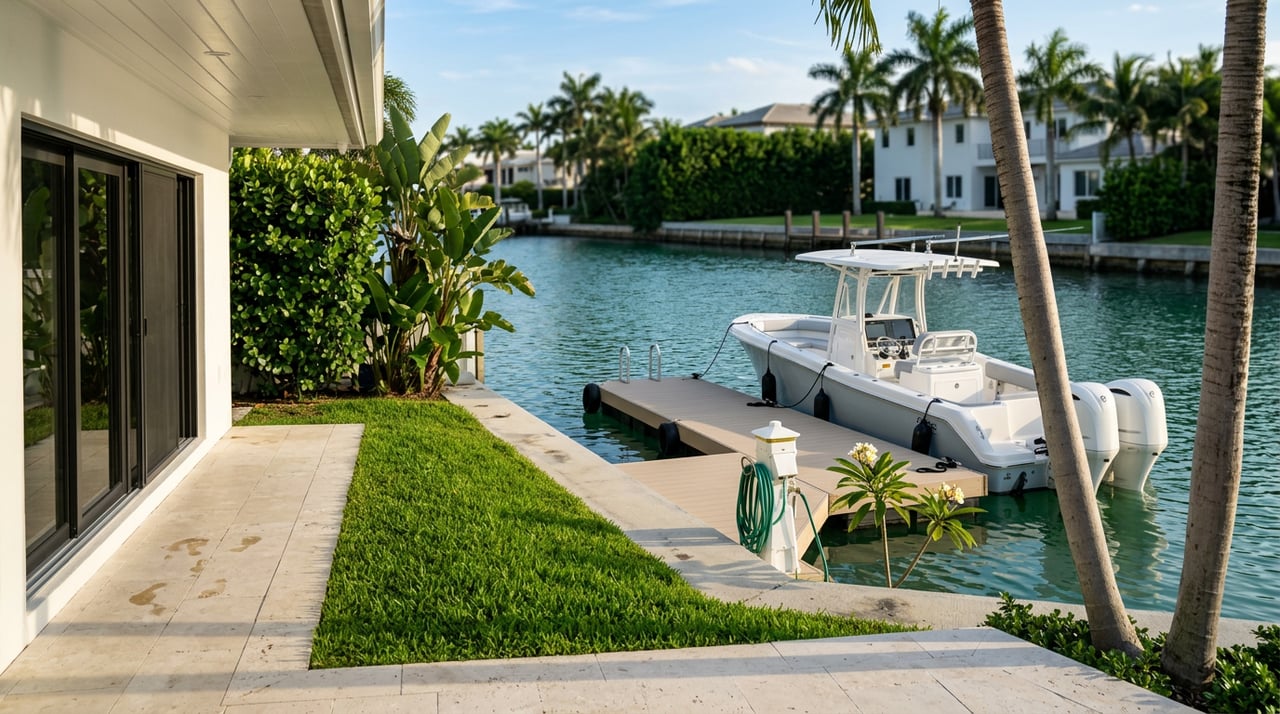
If you love life on the water, North Palm Beach gives you three distinct ways to live it: marina-adjacent condos, canal-front homes, and Intracoastal estates. Each option shapes your boating routine, privacy, maintenance, and permitting timeline. In this guide, you will learn how they differ, what to check for your boat, and the local rules that can add time and cost. Let’s dive in.
Three waterfront paths
Marina-adjacent condos
If you want convenience and support, condo living beside a full-service marina is hard to beat. At Old Port Cove, the adjacent Safe Harbor Old Port Cove marina lists fuel, pump-outs, concierge services, and deep-water capacity for large yachts, with approach and dock depths shown around the 9 to 12 foot range and slips for vessels advertised up to about 200 feet. You benefit from a social boating scene and on-site dining, and you avoid most private dock upkeep because the marina is professionally managed. Confirm whether slips are owned, leased, or rented seasonally, since allocation and rules are set by the marina and HOA. Explore Safe Harbor Old Port Cove’s services and specs.
Canal-front single-family homes
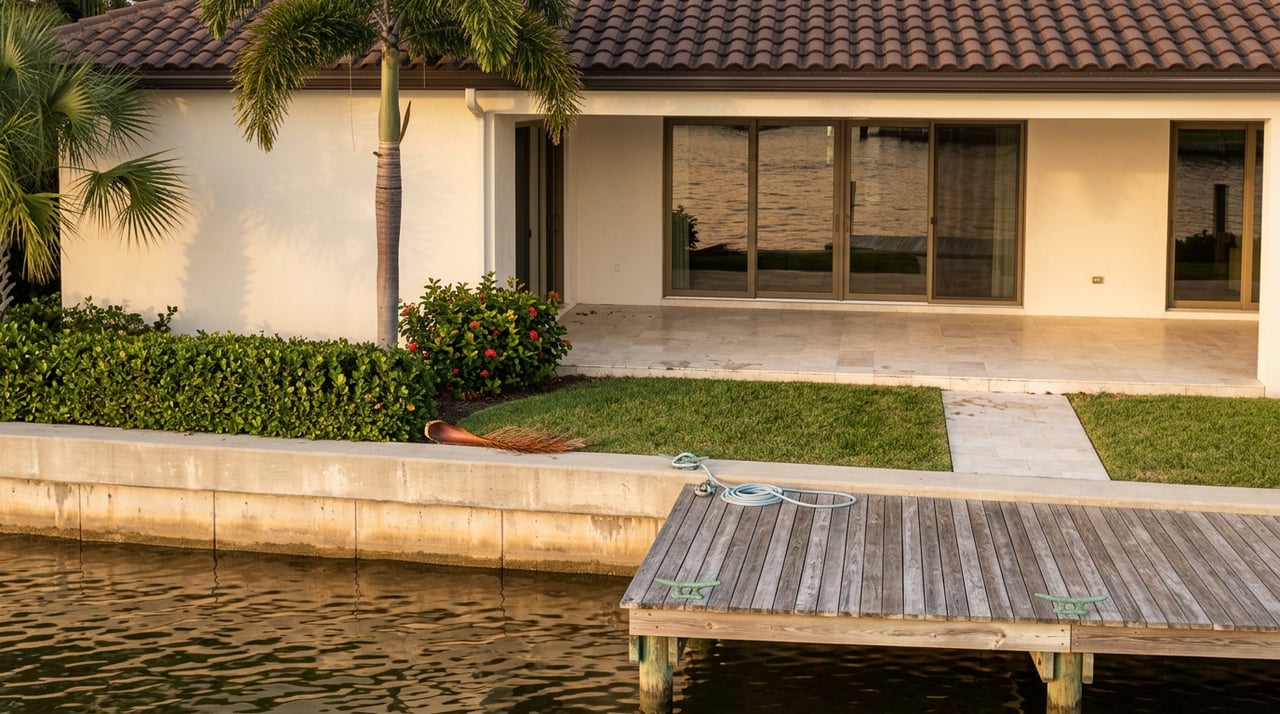
Canal homes give you a private dock and a quieter residential setting. These finger canals lead to the Intracoastal but depth and width vary block by block, which limits boat size and draft. Owners handle their own seawall and dock maintenance, and permits are required for major work like dock extensions or seawall replacement. Local agendas and permitting references show that canal conditions and dredging are recurring topics, so verify canal dimensions and maintenance history for your street. See a recent Village agenda reference touching on waterfront topics.
Intracoastal-facing estates
Intracoastal estates front the Atlantic Intracoastal Waterway along Lake Worth Lagoon. These sites can offer deeper water at the dock, more room for substantial dock structures, and faster runs to ocean inlets. Expect higher insurance and more complex seawall and dock permitting. Larger vessels can also use nearby deep-water marinas for in-water services and backup dockage. Review Old Port Cove’s deep-water marina context.
Boating access and depth
Depth dictates your options. Safe Harbor marinas in North Palm Beach publish approach and dock depths in the 9 to 12 foot range, with full services for larger boats. That makes them reliable for yachts and cruisers with 3 to 4 foot plus drafts. Check Safe Harbor Old Port Cove’s listed depths and capabilities.
Canal depth is shallower and can shift over time. Navigation in the Intracoastal channel is maintained through scheduled projects with the Florida Inland Navigation District and the U.S. Army Corps. Dredging restores authorized depths and can temporarily restrict traffic during active work. Read about Lake Worth Lagoon ICW maintenance and dredging. For mid-size boats, also consider Safe Harbor North Palm Beach’s services as a flexible alternative.
Ownership, rules, and costs
Marina-adjacent condos often separate residence ownership from slip control. Slips may be deeded, leased, or rented seasonally, and transient policies apply. Always confirm transferability, waitlists, power service, and fees with the marina and HOA.
Canal and Intracoastal homeowners fund their own dock and seawall work. You will need to check local rules for dock size, setbacks, and lifts. For major changes, plan for multi-agency review and a longer timeline.
Permitting and environmental review
Work along the shoreline or in the water can trigger state and federal permits. Projects seaward of the Coastal Construction Control Line typically require a Florida DEP CCCL permit. In-water work and stormwater changes may require an Environmental Resource Permit through the South Florida Water Management District and can also involve U.S. Army Corps authorization. Reviews often include conditions to protect seagrass, mangroves, manatees, and sea turtles, which can extend timelines. Start early and build the permit path into your closing and construction plans. Learn more at the Florida DEP CCCL program, the SFWMD Environmental Resource Permit page, and an example USACE public notice in the Lake Worth Lagoon area.
Flood zones and insurance
Waterfront parcels commonly fall within FEMA Special Flood Hazard Areas, including AE and VE zones. These designations affect building requirements and insurance costs. Request the property’s Flood Insurance Rate Map panel and a recent Elevation Certificate during diligence so you can price coverage and plan any elevation or retrofit work. View a local FIRM panel for North Palm Beach on the Village website.
Lifestyle and privacy fit
- Marina condos: You get a social boating hub, guest slips, and full-service support. You also get lock-and-go convenience when you travel.
- Canal homes: You enjoy a private yard and dock, a quieter street setting, and easy access for smaller boats, kayaks, and fishing.
- Intracoastal estates: You gain larger lots, deeper water, and faster routes to the inlet. Expect more complex seawall and dock stewardship.
Quick-match guide
- Choose a marina-adjacent condo if you want full-service dockage, easy fueling and pump-outs, and minimal dock maintenance. Confirm slip size, power, and seasonal rules with the operator at Safe Harbor Old Port Cove.
- Choose a canal-front home if your boating is day-trips and fishing with a smaller boat or davit. Verify canal depth, dock footprint limits, and whether local dredging supports your block. A recent Village agenda is a good checkpoint for waterfront topics. See the agenda reference.
- Choose an Intracoastal estate if you own a larger yacht or want the most direct access to the inlet. Verify deep-water dock documentation or secure a long-term slip at a nearby deep-water marina such as Safe Harbor North Palm Beach.
Questions to ask before you buy
- What is your boat’s LOA, beam, and draft? Will the listed slip or canal support it at all tides?
- Is the slip deeded, leased, or rented seasonally? What are the HOA or marina fees and guest policies?
- Who owns and maintains the seawall and dock, and what is their condition?
- What permits will be needed for planned changes? Will the project involve the CCCL, SFWMD ERP, or USACE?
- What is the parcel’s FEMA flood zone and Base Flood Elevation, and do you have a recent Elevation Certificate?
- Are there active or planned dredging projects in this reach of the ICW that could affect access during the season? Review regional ICW maintenance context.
Local notes for North Palm Beach
If you do not have a private slip, plan ahead for municipal access. Anchorage Park operates a resident-only boat ramp and wet or dry storage with a decal program. Space is limited and waitlists are common, so verify availability before you buy if you will rely on public facilities. Read details at the Anchorage Park program page and the Village storage and waitlist page.
Your next step
The right waterfront choice should fit your boat, your travel rhythm, and your appetite for maintenance and permitting. If you want help matching those details to the best streets and buildings in North Palm Beach, let’s talk. Schedule a private consultation with Donald W. Lilly, P.A. to align your boating goals with the right property and a clear plan for docks, permits, and insurance.
FAQs
What is the main difference between marina condos, canal homes, and Intracoastal estates in North Palm Beach?
- Marina condos center on professionally managed slips and services, canal homes offer private docks on shallower neighborhood canals, and Intracoastal estates front deeper water with faster inlet access and more complex dock and seawall needs.
How deep are local marinas compared with canals?
- Safe Harbor marinas list approach and dock depths around 9 to 12 feet, while canal depths vary by block and can shoal seasonally until dredged; larger drafts usually favor deep-water marinas or documented deep-water Intracoastal docks. See Old Port Cove specs and ICW maintenance context.
What permits do I need to modify a dock or seawall?
- Projects can require a Florida DEP CCCL permit, a South Florida Water Management District ERP, and sometimes U.S. Army Corps authorization, especially for in-water work or submerged lands. Start early to account for environmental review. Learn about CCCL and SFWMD ERPs.
How do flood zones affect my purchase and insurance?
- Many waterfront lots lie in FEMA AE or VE zones, which influence building requirements and flood insurance pricing; request the property’s FIRM panel and Elevation Certificate during diligence. View a local FIRM panel.
Is public boat storage or ramp access available if I do not have a slip?
- Yes, the Village runs resident-only launching and storage at Anchorage Park, but decals and storage often have waitlists; confirm availability early. Check Anchorage Park details and storage program info.
Can dredging projects affect my boating schedule?
- Yes, maintenance dredging improves navigation but can temporarily limit traffic where work is active; verify current conditions with local marinas if you run a larger draft. See ICW dredging coverage.