Ask anyone comparing gated communities along Jupiter's beach corridor what surprised them most about Ocean Walk, and most say the same thing: the HOA fee. Under $300 a month, gated on two sides, steps from the sand, and buyers assume they've found a loophole in South Florida's fee structure.
They haven't. They've found a different one. The low fee isn't a discount on the same product neighboring communities sell. It's a signal that Ocean Walk is selling something else entirely, and once you see what that something else is, the rest of the community's numbers, its rental rules, and its wildly inconsistent price-per-square-foot start to make sense together instead of looking like unrelated trivia.
What Two Hundred and Ninety Dollars Actually Buys
Ocean Walk is the only gated community in Jupiter with two separate entries, one off A1A and one off US 1, which means residents get controlled access from both the beach side and the commercial side of town. A canal splits the neighborhood into east and west sections, and the interior streets carry fish names: Spearfish Lane, Albacore Lane, Tarpon Lane, Mako. It reads like a small fishing village dropped a quarter mile from the ocean, and the HOA dues reflect exactly that scale of operation. The fee covers gate security at both entrances and maintenance of the common grounds. That's the full scope.
Compare that to Jupiter's country club communities, where dues fund a golf course, tennis programming, a dining room, and a fitness center, and the number on the HOA sheet reflects all of it bundled together. Ocean Walk was never built around a shared clubhouse, so there's no shared clubhouse budget to collect for. The fee is small because the list of things it pays for is small, not because the community itself is a bargain.
Where the Amenity Budget Actually Went
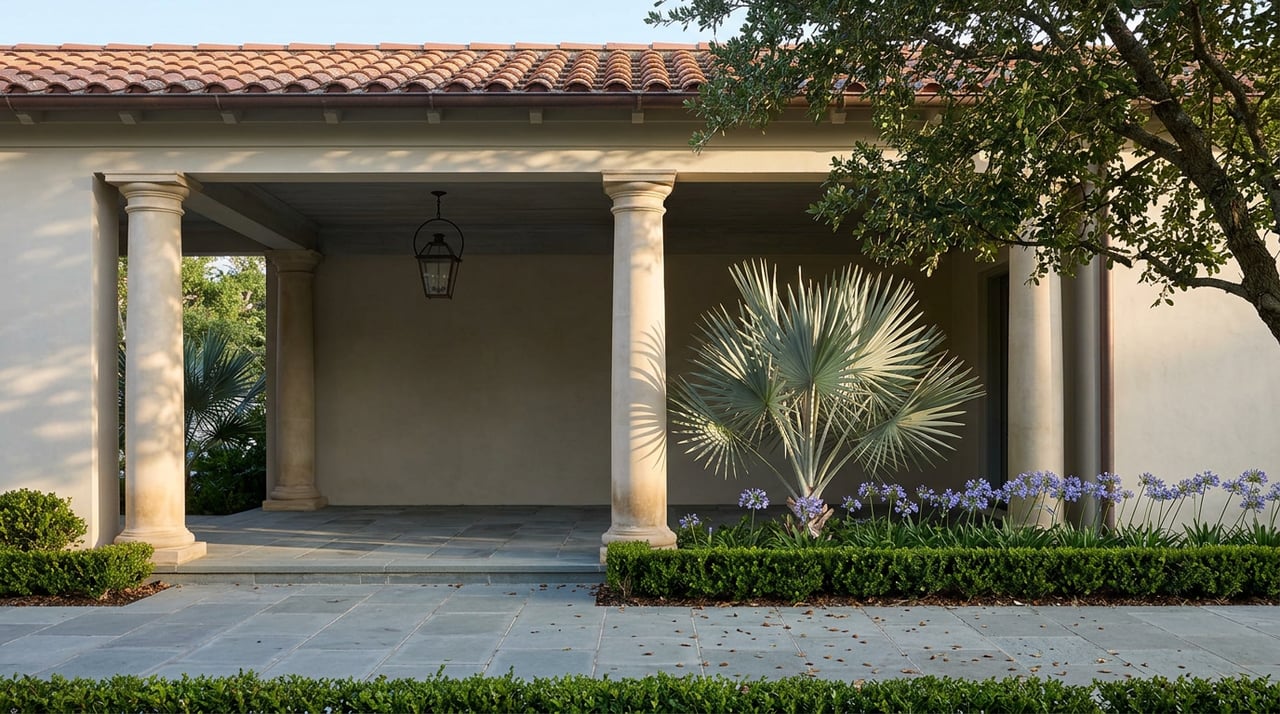
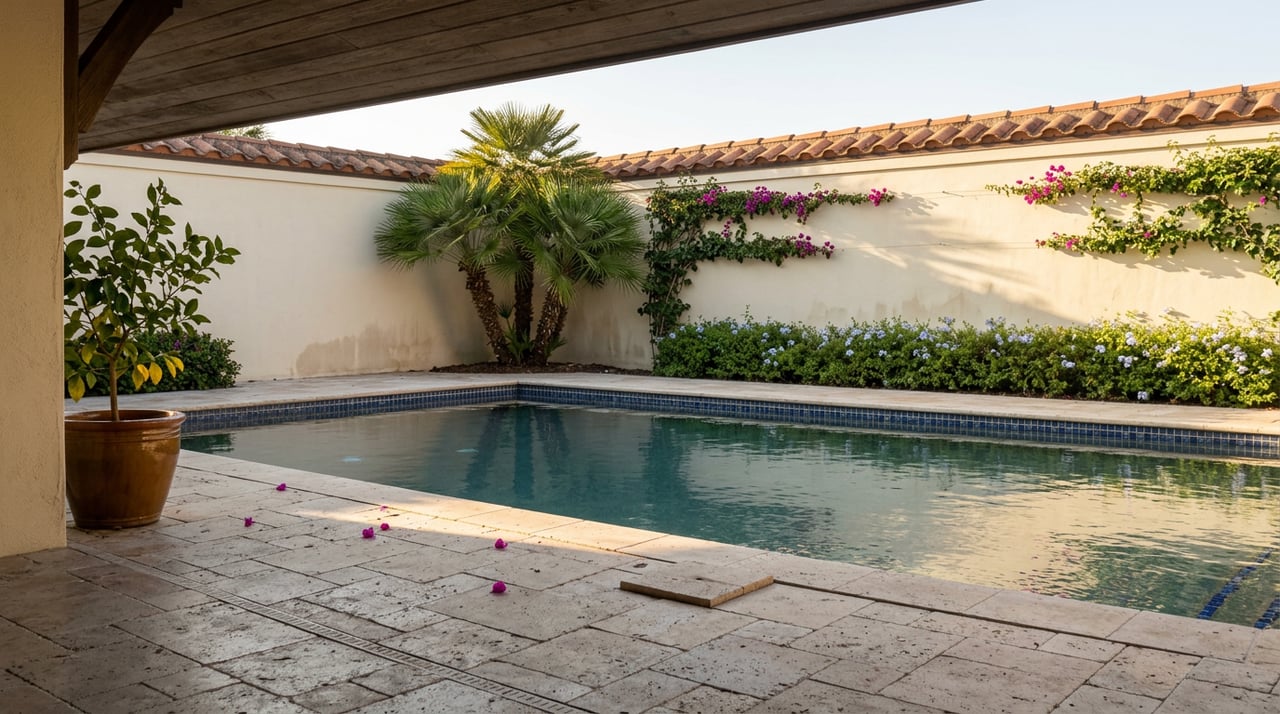
Here's the part that explains everything else. Every one of the 185 homes in Ocean Walk, built between 1978 and 1987 across four original floor plans, comes with its own backyard pool and a walled, private courtyard. The Mediterranean influence in the stucco facades and tile rooflines wasn't cosmetic. It was the design decision that let the developer skip a communal pool deck entirely. Instead of one shared resort amenity that every household's dues would need to underwrite, each lot got its own miniature version, sealed off from the neighbors by a privacy wall.
That trade shows up the moment you tour a home here. There's no clubhouse to walk past on the way to your unit. There's a gate, a quiet interior street, and then a private courtyard that does the work a resort deck does elsewhere. The amenity spending didn't disappear when the HOA fee stayed low. It moved from the community budget into each individual property, which is exactly why the condition of that individual property starts to matter more here than it does in a community where amenities are shared and standardized.
Five Sales, One Small Street Grid, a $400-a-Foot Spread
That shift from shared to individual amenity investment is visible in the numbers the moment you line up recent transactions. Beaches MLS records show the following closings and one pending sale inside Ocean Walk over the past several months:
| Address | Status | Price | Square Feet | Price per Sq Ft |
|---|---|---|---|---|
| 105 W Tarpon Ln | Sold June 22, 2026 | $2,300,000 | 2,575 | $893 |
| 102 W Sandpiper Cir | Sold May 8, 2026 | $1,850,000 | 1,969 | $940 |
| 110 E Spearfish Ln | Sold April 22, 2026 | $1,600,000 | 1,988 | $805 |
| 106 Albacore Ln | Sold February 13, 2026 | $1,285,000 | 1,700 | $756 |
| 105 Albacore Ln | Pending | $2,350,000 | 2,020 | $1,163 |
Four closed sales, ranging from $756 to $940 per square foot, plus a pending contract priced well above that band at $1,163. All five sit inside a community built on four repeated floor plans across a single decade. The shell is nearly identical from one address to the next. The finish is not.
Zoom out to the trailing twelve months as of July 2026, and the community-wide picture confirms the same story: thirteen homes changed hands at an average asking price of $1,999,000 against an average selling price of $1,877,410, a 94 percent list-to-sell ratio, an average of $743 per square foot, and an average of 119 days on market. Thirteen sales across 185 homes works out to roughly 7 percent annual turnover, thin enough that a single heavily renovated home and a single untouched original from the late 1970s can anchor the average from opposite ends within the same reporting period. In a market this size, one renovated kitchen and pool deck can move the neighborhood's average more than a comparable renovation would in a larger, more liquid community.
One more detail worth knowing before you start pulling records: depending on which MLS sheet a listing draws from, this same community shows up as Ocean Walk, Ocean Walk Place, or the more formal OCEAN WALK PLACE PH. Same 185 homes, same two gates, different label from one filing to the next.
The Rental Cap Nobody Reads Until After Closing
Ocean Walk's HOA caps owners at two rentals per year with a 90-day minimum lease term. That single rule reshapes what kind of buyer this community actually works for. It closes the door on a weekly or monthly vacation-rental model entirely. There's no path to Airbnb-style turnover here, no matter how strong the beach-block location looks on paper.
What it does support is a two-season tenant structure: a winter lease and, if an owner chooses, a second longer-term lease later in the year. For a buyer modeling this purchase as an income property with flexible short-term bookings, that's a plan that needs to change before the offer goes in, not after. It's the kind of clause that tends to surface during due diligence, once a contract is already signed, and it's worth confirming with current HOA documents before assuming any particular rental strategy will pencil out.
A Few Questions Worth Asking Before You Tour
Does the low HOA fee mean lower-quality upkeep in Ocean Walk? No. It means the fee's scope is narrow: gated entry security at both entrances and common ground maintenance, not a clubhouse or programmed amenities. Because there's no shared amenity budget acting as a baseline, the condition of any individual home depends far more on that owner's history of upkeep and renovation than it would in a community where dues fund uniform amenity standards.
Can I run an Ocean Walk home as a short-term vacation rental? Not under the current HOA rule. Owners are limited to two rentals per year with a 90-day minimum, which rules out weekly or monthly turnover and points the property toward a longer seasonal tenant instead.
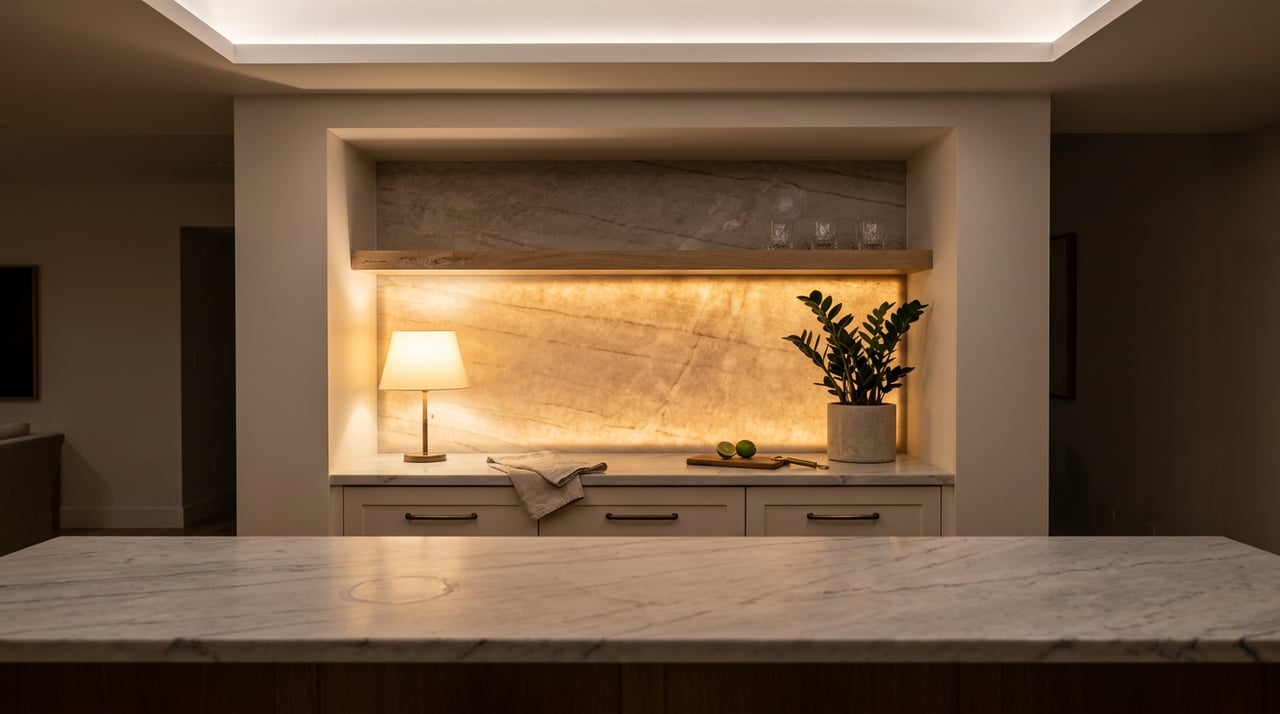
Why do two homes on the same street sell for such different prices per square foot? Same 1978 to 1987 shell, different renovation history. With four repeated floor plans across the community, buyers are pricing the kitchen, the bath, the courtyard finish, and the pool deck at least as much as the address itself.
If you're weighing Ocean Walk against another beach-block community in Jupiter, the fee sheet alone won't tell you which one actually fits your plans. Reading it against the renovation history of the specific home, and against how you intend to use it, will. Donald Lilly pairs three decades of interior design judgment with day-to-day knowledge of Jupiter's beach communities, which means a walkthrough with him covers both what a home is worth today and what a targeted renovation could do to that number before you sell. Schedule a free consultation to talk through what a specific Ocean Walk address, or any other beach-block property on your list, is really telling you.