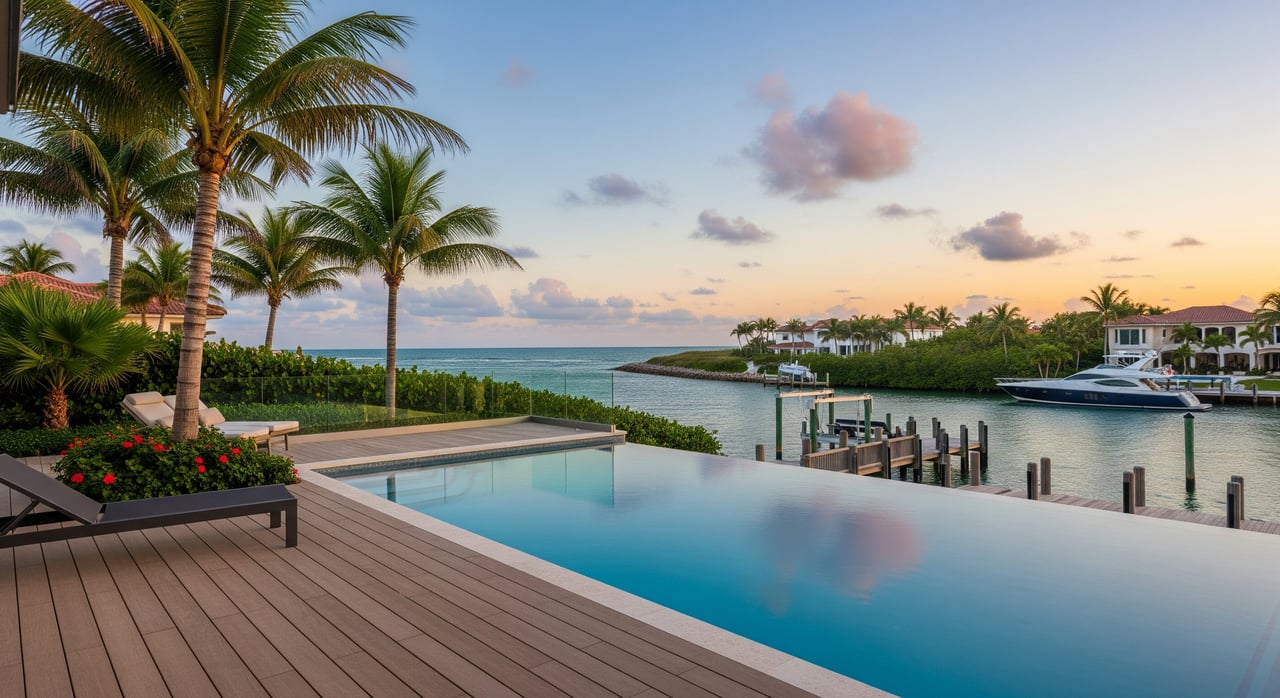
Considering a home on the water in Juno Beach? You are choosing between two incredible lifestyles: the drama of the Atlantic Ocean and the calm, boat-friendly Intracoastal Waterway. Each offers distinct benefits, costs, and long-term tradeoffs. In this guide, you will compare lifestyle, ownership, risk, and resale so you can buy or sell with confidence. Let’s dive in.
Oceanfront living: what you gain
When you live oceanfront, you wake up to unobstructed Atlantic views and sunrise skies. You get immediate beach access for swimming, walking, and surf days. You also experience more wind, salt spray, and surf noise than inland waterfront.
Oceanfront properties in Juno Beach include mid-rise condos with beach amenities and single-family homes that often sit on elevated foundations. Condos typically handle exterior maintenance and shoreline care within the HOA. Single-family lots can be narrower, so builders often go vertical and follow coastal construction standards.
Expect stronger building requirements near the open ocean. Many oceanfront parcels fall in FEMA velocity zones where wave action drives design, which means elevated structures, wind-rated windows, and breakaway features. This adds resilience, but also increases build and renovation costs.
From a maintenance standpoint, salt and sand are the main factors. Metals, HVAC equipment, and exterior finishes can wear faster. Beach paths and dune walkovers also need upkeep, especially after storms or seasonal high tides.
Intracoastal living: what you gain
Intracoastal properties front the calmer waters of the Lake Worth Lagoon and the ICW. You enjoy broad water views, sunset light in some locations, and less surf noise. Many parcels include private docks, easy ICW access, and proximity to marinas.
If you are a boater, the ICW is the primary choice. You can expect dockage, boat lifts, and protected water for quick outings. Before you buy, you should verify channel depth, dock size limits, and whether permits allow the slips or lifts you want.
Homes along the ICW vary widely. You will see single-family homes with docks, low-rise condos and townhomes along canals, and larger estates on wider lots. Many communities have HOAs that manage docks, bulkheads, or shared slips, so review rules and reserve funds with care.
Maintenance looks different than on the beach. The focus is on dock and seawall care, pilings, boat lifts, and occasional dredging issues. While you are more sheltered from waves, you still face storm surge and tidal flooding during significant weather.
Lifestyle comparison at a glance
- Views and access
- Oceanfront: direct beach access, big Atlantic vistas, sunrise skies.
- Intracoastal: broad lagoon views, private docks, calmer waters, sunset glow in some spots.
- Recreation
- Oceanfront: beach walks, swimming, surf, fishing from the beach or nearby pier.
- Intracoastal: boating is the star, plus paddleboarding and kayaking in protected water.
- Privacy and ambiance
- Oceanfront: seasonal beach activity near public access points, more wind and surf sound.
- Intracoastal: more sheltered and often quieter, with activity centered on your dock.
- Walkability and local feel
- Juno Beach offers a village-like pace with parks and shoreline access. Proximity to restaurants, the pier, and services depends on the specific neighborhood and parcel.
Property types and building realities
- Oceanfront: mid-rise condos, elevated beach houses, and small beachfront lots. Expect coastal construction requirements, higher wind standards, and in some cases velocity-zone design.
- Intracoastal: single-family homes with docks, townhomes and condos on canals, and estate lots with broader frontage. Dock, seawall, and in-water work require permits and may face environmental limits.
For both, HOA and condo rules can shape how you use the property. Review rental policies, assessments, reserve studies, and maintenance plans, especially for shoreline or dock repairs.
Risk, resilience, and long-term outlook
Palm Beach County and the Town of Juno Beach manage beaches and support periodic nourishment projects. Oceanfront conditions can change over time as projects, storms, and erosion shape the shoreline. The ICW and lagoon areas have protections for seagrass and mangroves that can affect permitting and construction timing.
Flood exposure differs by location. Oceanfront parcels encounter higher wave and storm-surge potential, while Intracoastal parcels face surge and tidal flooding with less direct wave impact. FEMA maps designate V zones and AE zones that influence construction standards and insurance.
Sea levels are rising across South Florida, increasing the frequency of nuisance tidal flooding over coming decades. If you plan for 10 to 50 years, factor in access during king tides, utility resilience, and the feasibility of future retrofits such as elevation.
Insurance and operating costs
Coastal Florida insurance requires planning. You will likely carry homeowners coverage with wind or hurricane components, plus flood insurance when required by lenders. Premiums vary with flood zone, elevation, age of construction, and mitigation features.
As a general pattern, oceanfront policies often cost more due to wave exposure and higher storm-surge risk, although actual premiums depend on property specifics. Intracoastal premiums can still be significant, especially in high-risk flood zones.
Maintenance costs also track the setting. Oceanfront owners budget for corrosion, exterior refresh cycles, and sand management. Intracoastal owners plan for seawall repairs, piling replacement, boat-lift care, and routine dock inspections.
Resale and market appeal
Both waterfront options command a premium over non-waterfront homes. Oceanfront often achieves the highest price per square foot because of direct beach access and open-ocean views. Intracoastal homes remain highly desirable to boaters who value private dockage and protected water access.
Resale performance depends on parcel-level details. Buyers evaluate flood zone and elevation, shoreline history, dock capacity, HOA strength, and insurance costs. Your sale outcome improves when you can present recent inspections, elevation data, and clear records of permits and maintenance.
Permits and environmental rules to know
- Dock and seawall work on the ICW typically requires coordination with local authorities, state agencies, and sometimes federal permits. Rules can limit dock length, height, and vessel size.
- Oceanfront construction follows coastal standards that can include elevation, breakaway walls, and wind-resistant features. Permitting becomes more stringent in velocity zones.
- Environmental protections matter. Sea turtle nesting can schedule beach-related work, and seagrass or mangroves in the lagoon can limit in-water activities and timing.
Buyer checklist: oceanfront vs Intracoastal
Use this practical list to compare properties side by side:
- Flood and elevation
- Confirm current FEMA flood zone, request an elevation certificate, and review the latest flood maps.
- Surveys and boundaries
- Get a recent survey and legal description, noting the mean high-water line, easements, and any public access points.
- Structural and shoreline systems
- Inspect foundations, roofing, windows and doors for wind ratings, and visible corrosion. On the ICW, assess seawalls, docks, pilings, and lifts.
- Permits and compliance
- Verify permits and approvals for past additions, docks, and seawalls. Note grandfathered items and current code requirements.
- Insurance and costs
- Obtain multiple quotes for homeowners, wind, and flood policies. Model annual maintenance for seawalls, docks, exterior finishes, and beach access.
- HOA and condo records
- Review CC&Rs, reserve studies, meeting minutes, special assessment history, and master insurance details.
- Long-term resilience
- Ask about local beach nourishment plans, inlet and shoreline management, and any scheduled resilience or hardening projects.
Which is right for you?
Choose oceanfront if you want direct sand access, iconic Atlantic views, and a dynamic shoreline lifestyle. This is ideal if you value the beach first and are ready to plan for higher wind, wave, and maintenance exposure.
Choose Intracoastal if you prioritize boating, private docks, and sheltered water views. You will still plan for surge and tidal flooding, but your maintenance focus will be docks and seawalls rather than surf-facing elements.
If you are undecided, start with your day-to-day. Ask yourself whether beach mornings or a boat at your back door will bring you more joy, then align your budget with the insurance and maintenance profile that fits that choice.
How we help you decide
You deserve more than a quick pros-and-cons list. With design-led preparation, micro-market expertise, and a concierge approach, you can align lifestyle, risk, and return on investment with clarity. Our advisory process brings parcel-level insight on flood zones, permitting, dock feasibility, and HOA strength, paired with a refined plan for value creation through staging and presentation.
If you are buying, you will get targeted property selection and due diligence that fits how you live, whether that means dawn patrols on the sand or weekend cruises on the ICW. If you are selling, you will get design-informed preparation and global marketing that speaks to the right buyer for your waterfront setting.
Ready to explore the best fit on Juno Beach’s water? Connect with Donald W. Lilly, P.A. for tailored guidance and a discreet, high-touch experience that puts your goals first. Donald W. Lilly, P.A.
FAQs
What are the key differences between oceanfront and Intracoastal in Juno Beach?
- Oceanfront offers direct beach access and open-ocean views with higher wind and wave exposure, while Intracoastal provides calmer water, private docks, and a boating-oriented lifestyle.
How do flood zones affect oceanfront vs Intracoastal purchases?
- Oceanfront parcels are more likely to fall in velocity zones with stricter building standards, while Intracoastal parcels often sit in AE or similar zones, yet both require careful review of FEMA maps and elevation data.
What should boaters verify before buying on the Intracoastal?
- Confirm dock permitting history, allowable dock size and lifts, channel depth, seawall condition, and any environmental constraints that could affect future improvements.
Are HOA and condo rules different on the beach vs canals?
- Beachfront condos often manage beach access, exterior care, and insurance pools, while Intracoastal communities may manage docks, bulkheads, and slips, so review each HOA’s documents and reserves.
How does beach nourishment impact oceanfront ownership in Juno Beach?
- Nourishment projects can reshape beach width and storm buffering over time, which influences access, views, and long-term maintenance expectations for oceanfront owners.
Do Intracoastal homes avoid hurricane damage?
- Intracoastal homes are typically more sheltered from direct wave action but still face strong winds and storm surge, so construction quality, elevation, and mitigation remain essential.